The sublime is the Mission San Xavier at Bac, which is about twenty minutes south of Tucson. It encapsulates the history of the region and is part of the chain of Missions set up by the Spanish going all the way up through California which you may already have seen.
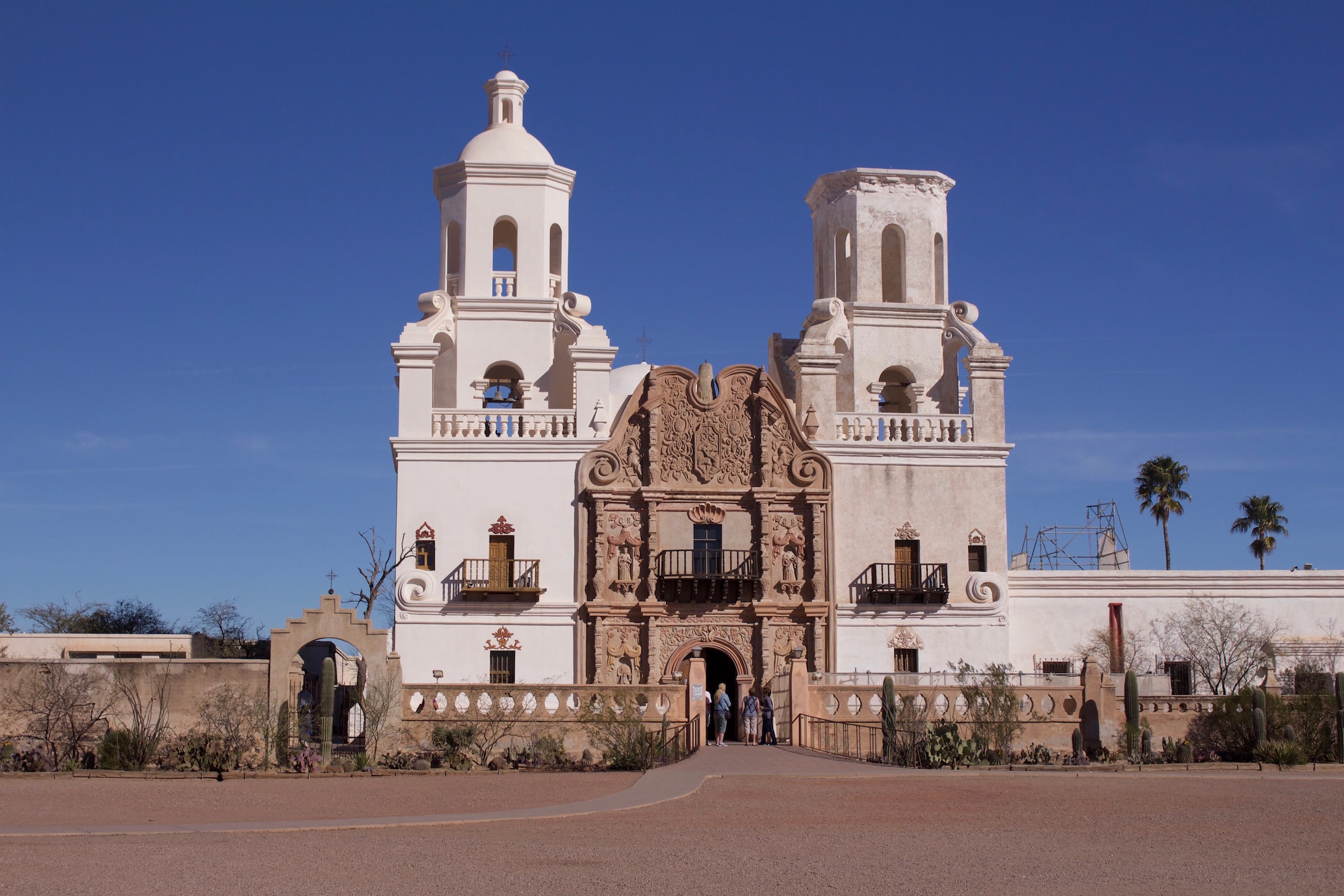
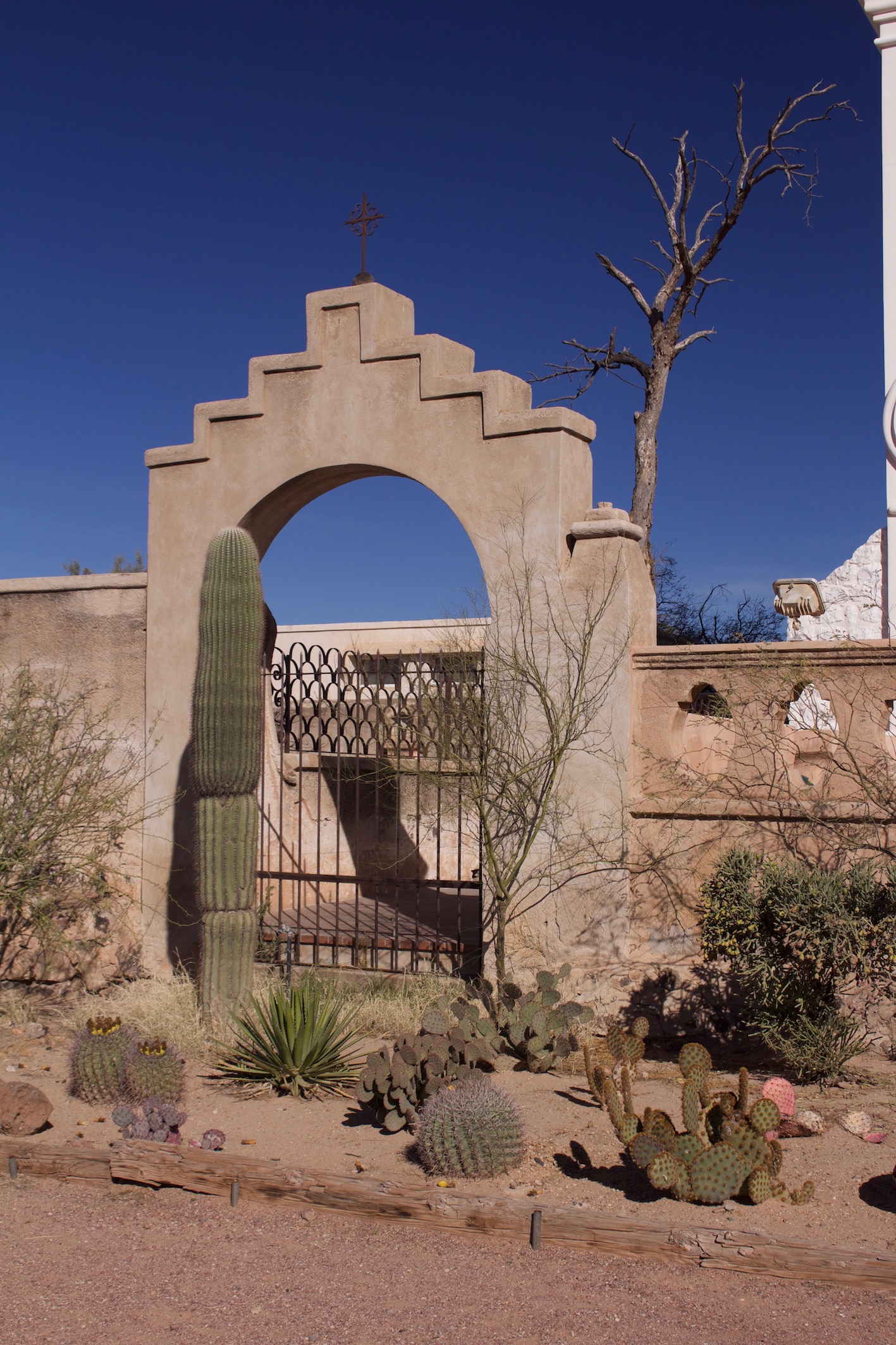
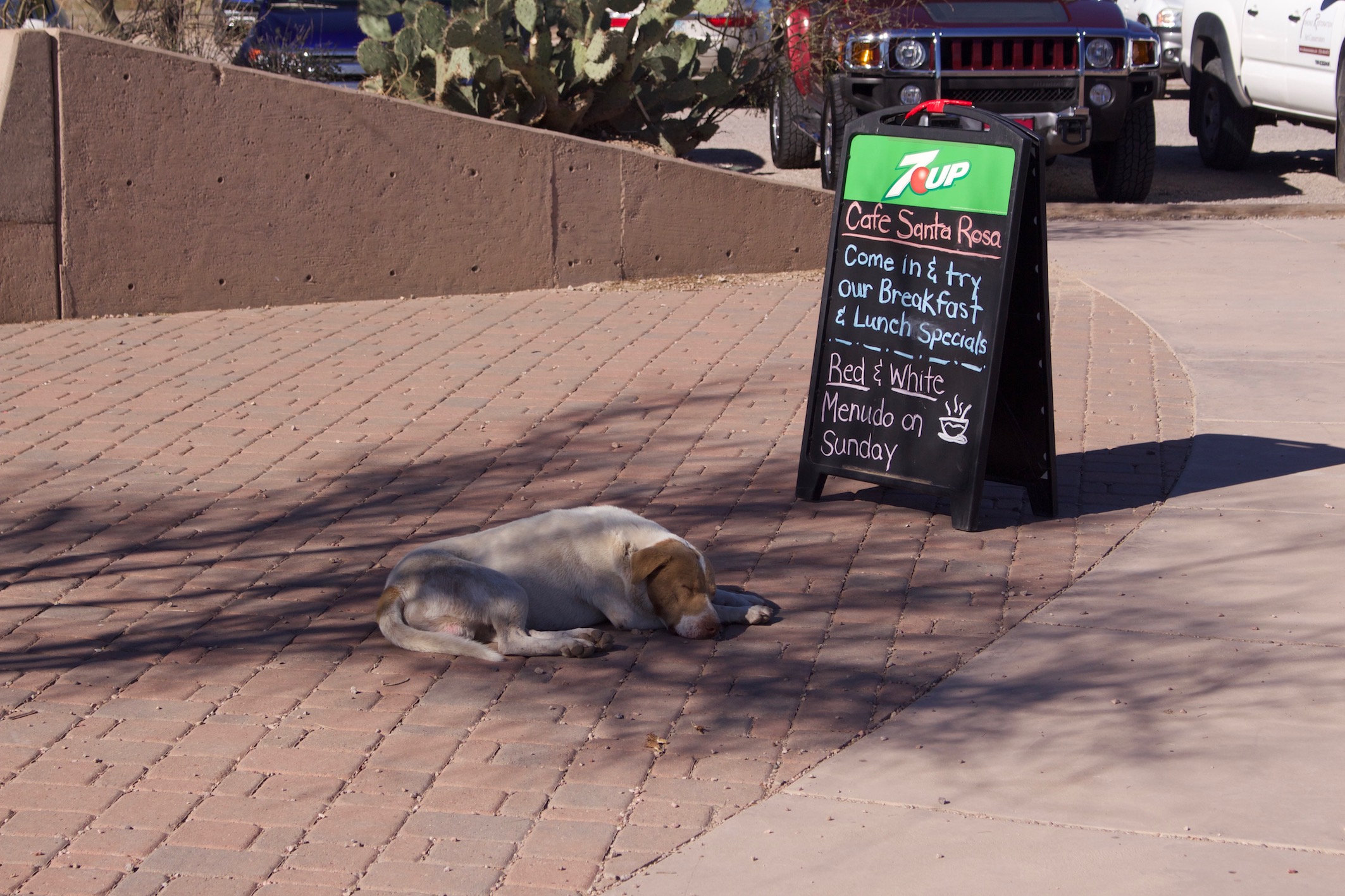
The Jesuits started the ball rolling in 1692, developed it for 75 years, and were then expelled en masse from Spain’s oversea territories. What you see now was all built in the late C18th by the Franciscans who replaced them. One can only imagine the impact of the building (and it’s simpler predecessor) on the local Indian population – it is visible for miles on the plain. They were ignorant of adobe building before the missionaries arrived, not that they had any choice in any matter, becoming first Spanish, then Mexican, and finally Americans, though perhaps these details passed them by.
Equally, it must have been pretty grim for the missionaries, including multiple attacks by the Apaches throughout the C19th and there were periods when it was unoccupied. Over the years the church fell into increasing disrepair. Happily there has been a very significant period of recent refurbishment and conservation of both the building and its interior.
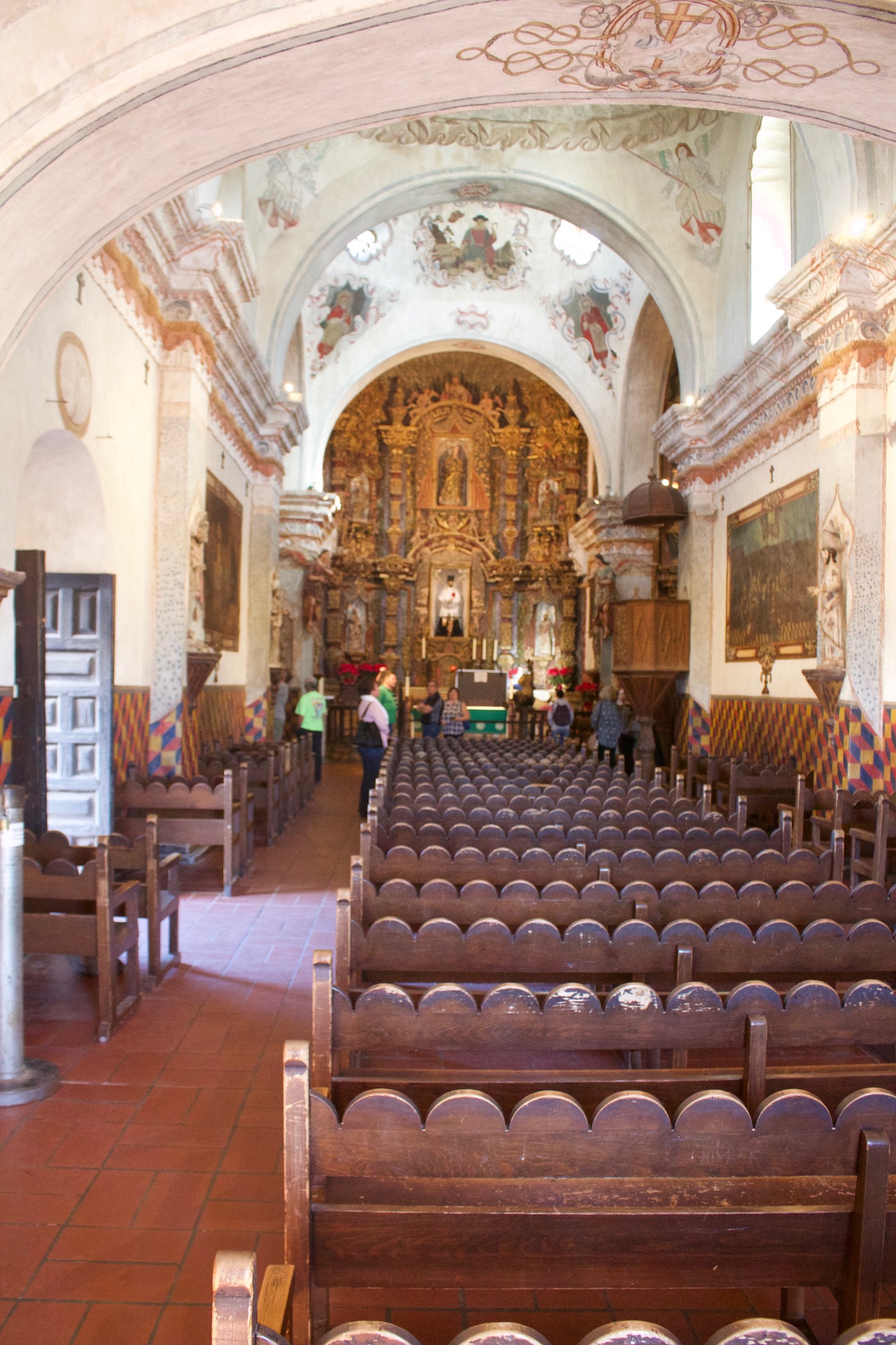
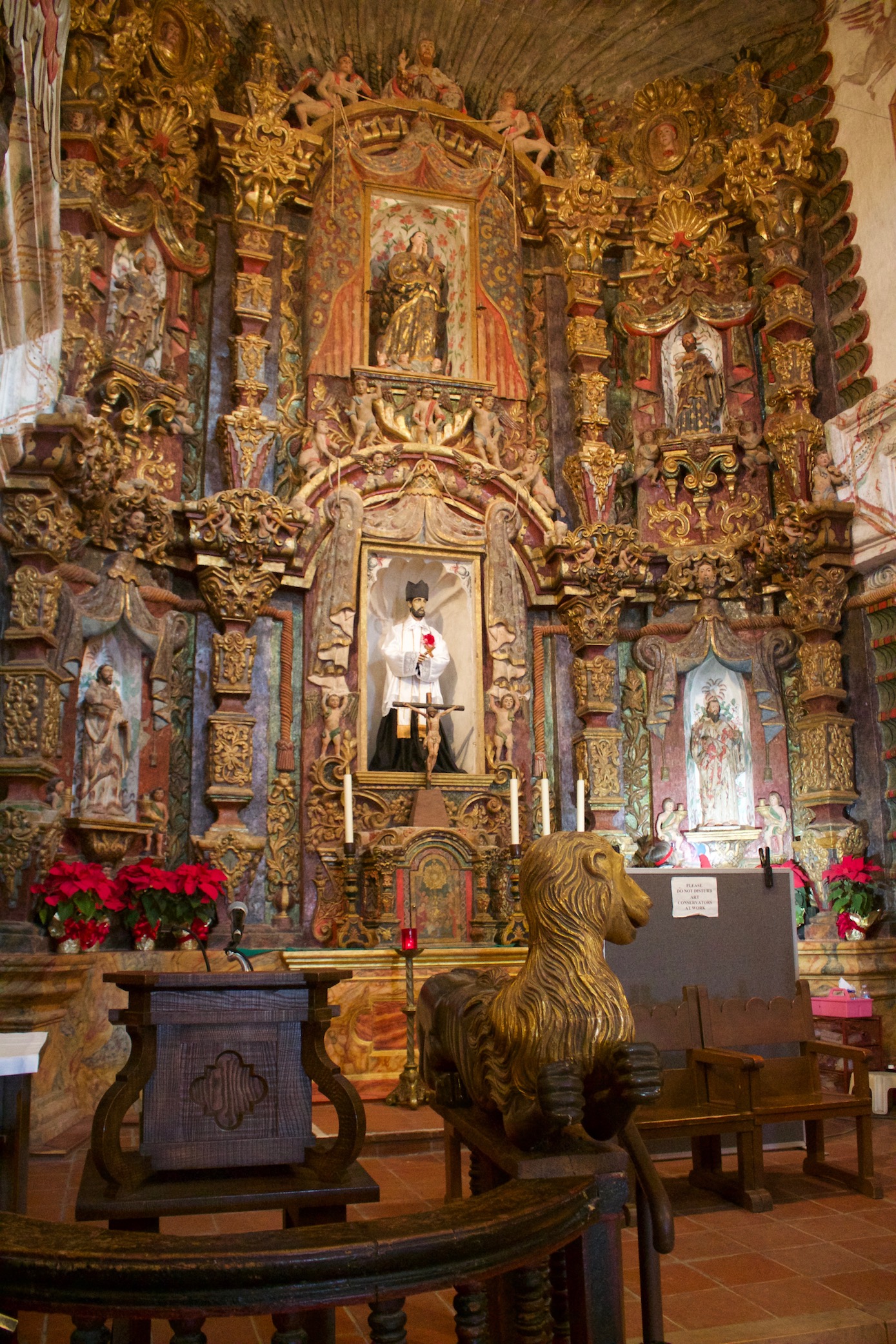

Perhaps inevitably that included removing botched renovation attempts at both levels. For example in relation to the domed roof it’s been discovered that the best replacement for destructive concrete work is to go back to square one and use materials from the time of original build, which includes cactus juice in the mortar mix!
The end result is a stunning and almost jolly example of a baroque church – it’s the oldest in the US. I particularly liked the female angel on the roof who actually shows her legs!
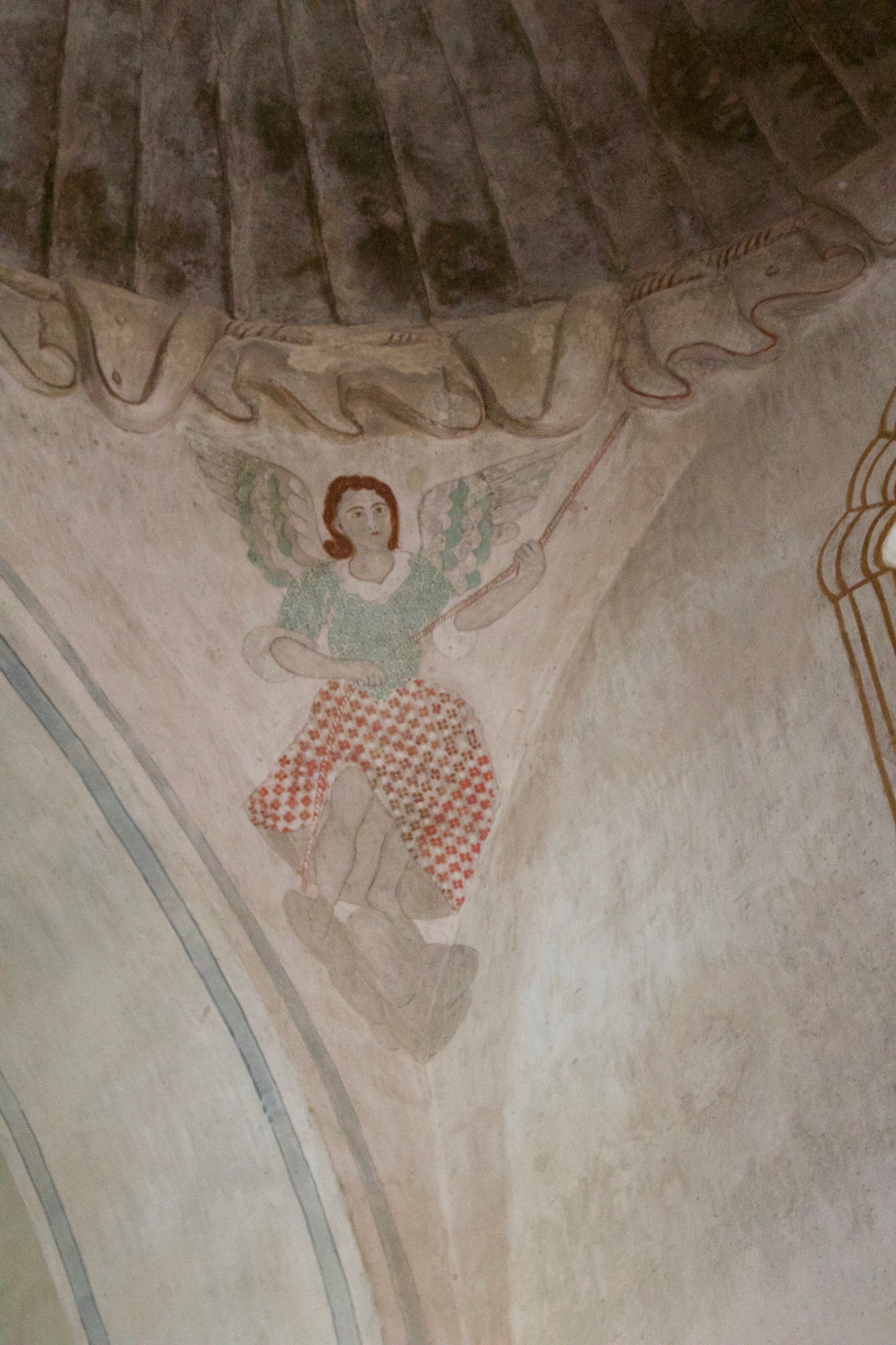
It’s also a very serene place and it was pleasant to take stock in the courtyard which was blissfully cool.
However, not chilling, which is a fair description of the Titan Missile Museum, which is fifteen minutes further south.

It’s the last surviving example of the 54 sites that once housed what was America’s biggest nuke at 9 megatons. As the blurb cheerfully observed each weapon had the same explosive power as 90,000 box cars of TNT, which would be a train 1534 miles long, and which is a greater quantity than all the bombs dropped in WW2.
It was very interesting. The moral issues were not a source of particular concern though to be fair it was only ever to be a responsive weapon. Once the order to launch was received, two keys, removed from the red drawer of the locked filing cabinet, had to be turned simultaneously but were sufficiently far apart that two people had to be involved.
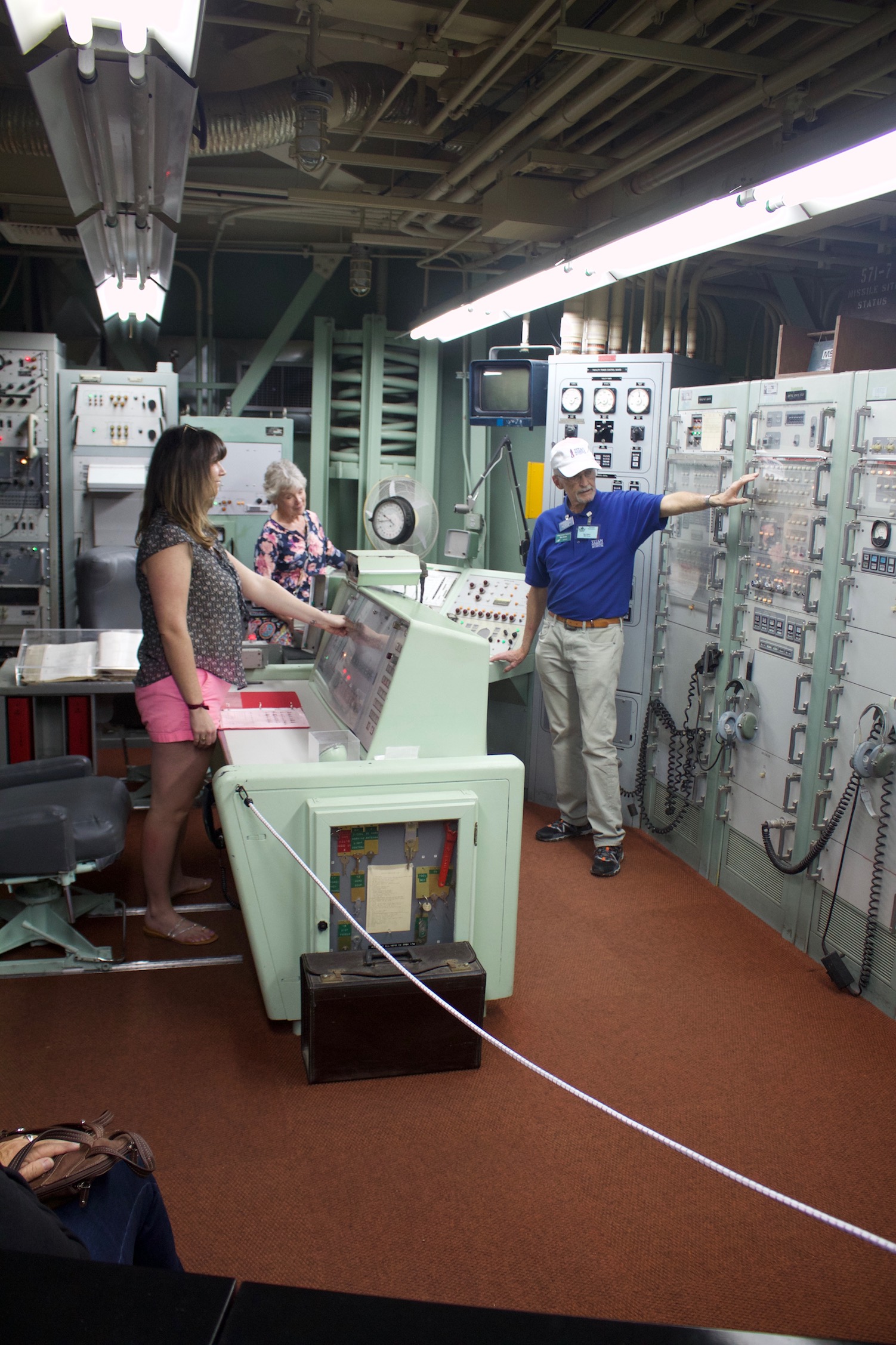

That was a common theme of the entire complex.

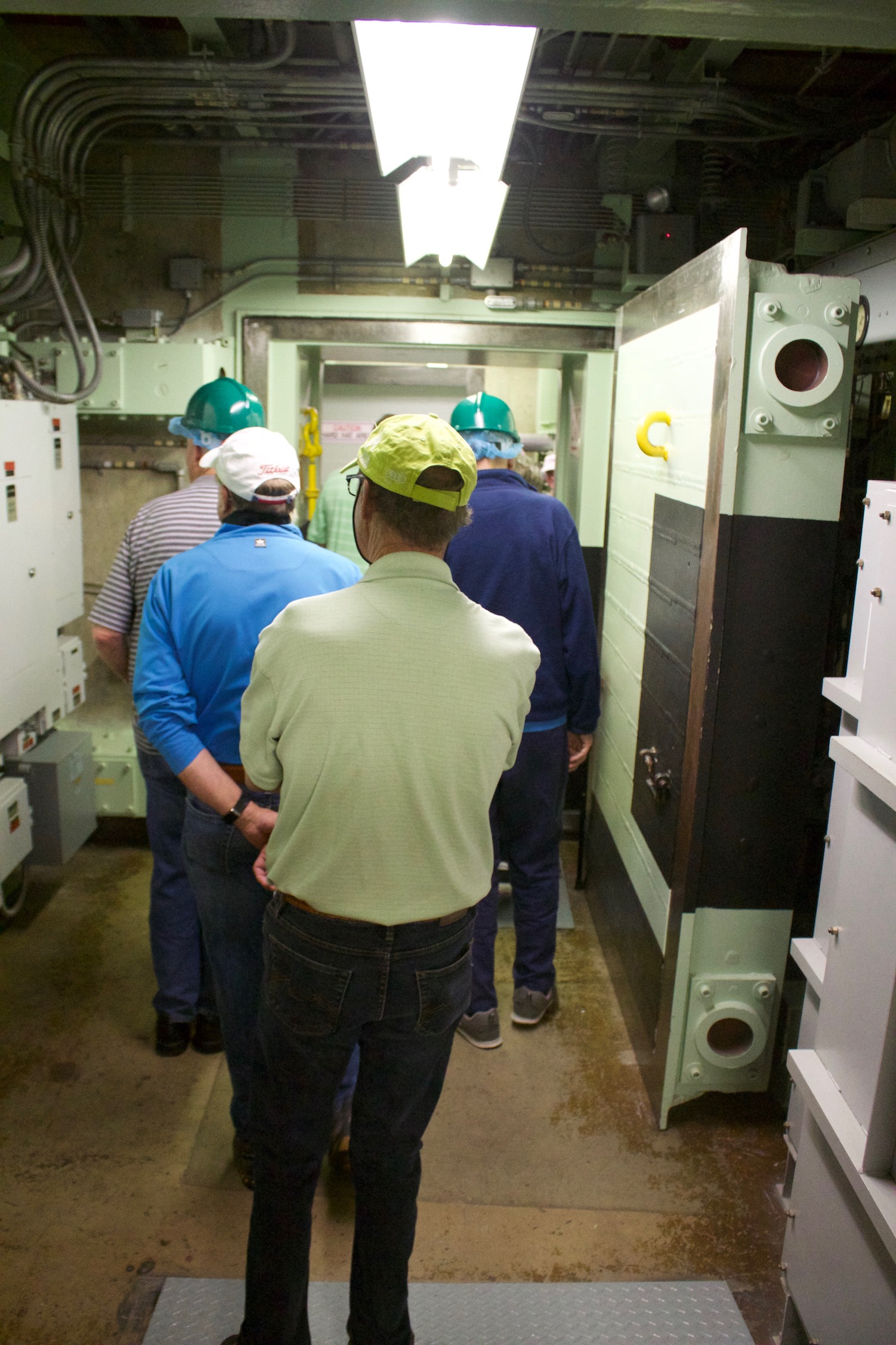
Security when in use was extreme as you might imagine, and a crew change after a 24 hour shift involved the oncoming personnel passing through four sets of gates or colossal blast doors, including the commander using a code which had to be burnt or eaten after input.
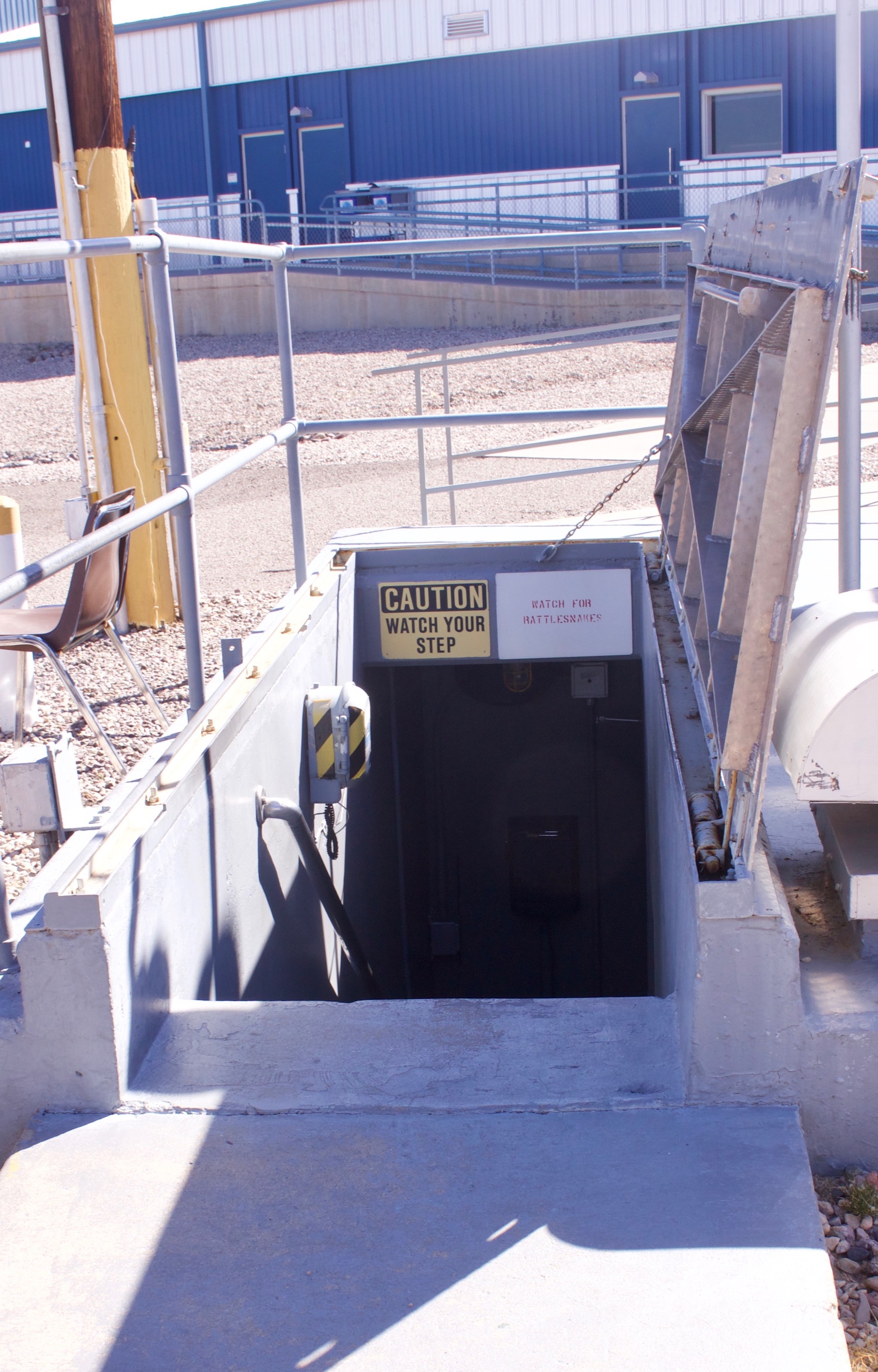
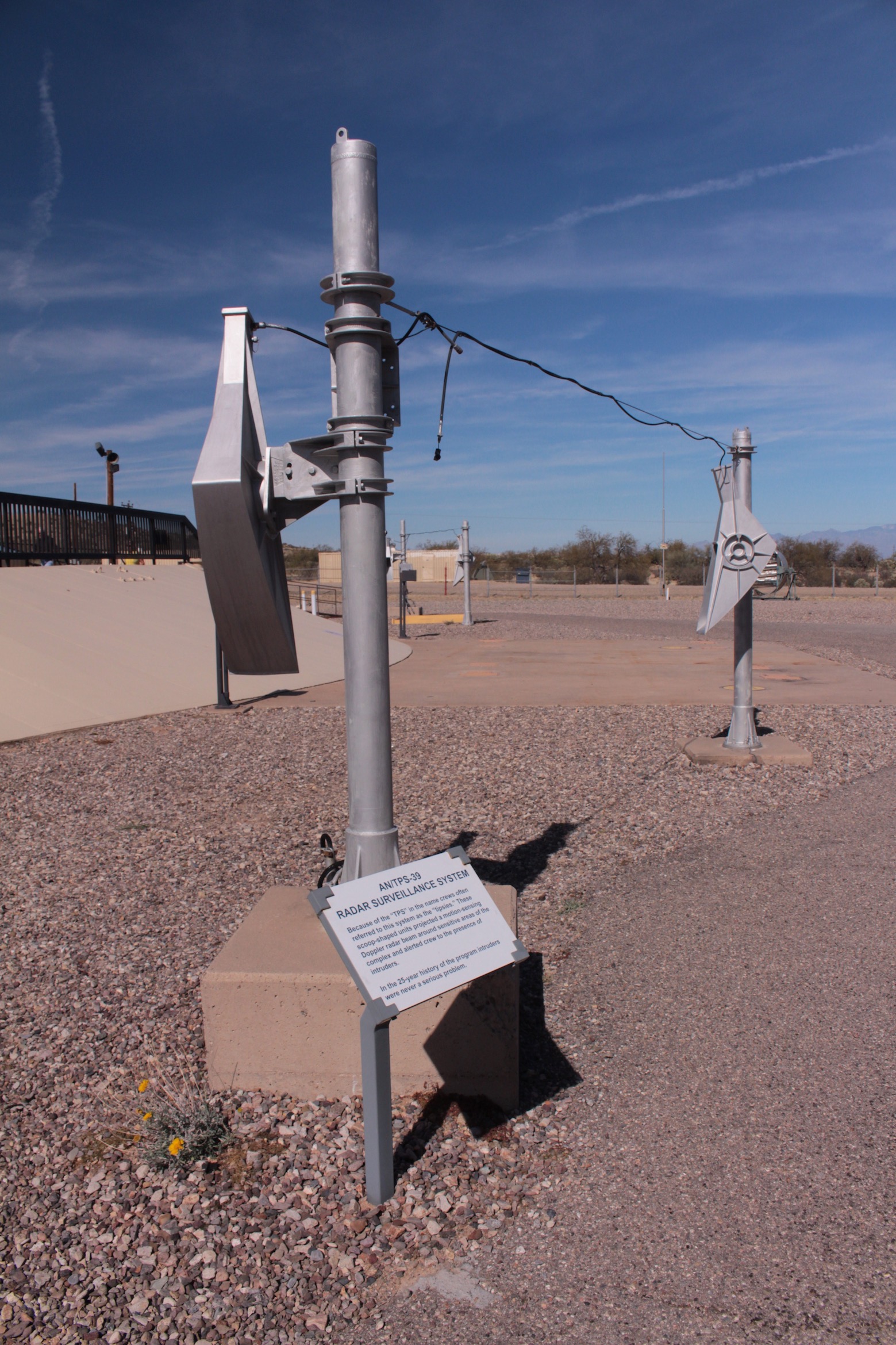
Curiously there was no great presence above ground. Security patrols were available in their jeeps but primarily it was fences and gates, along with radar beams which if broken would result in alarms going off in the control room.


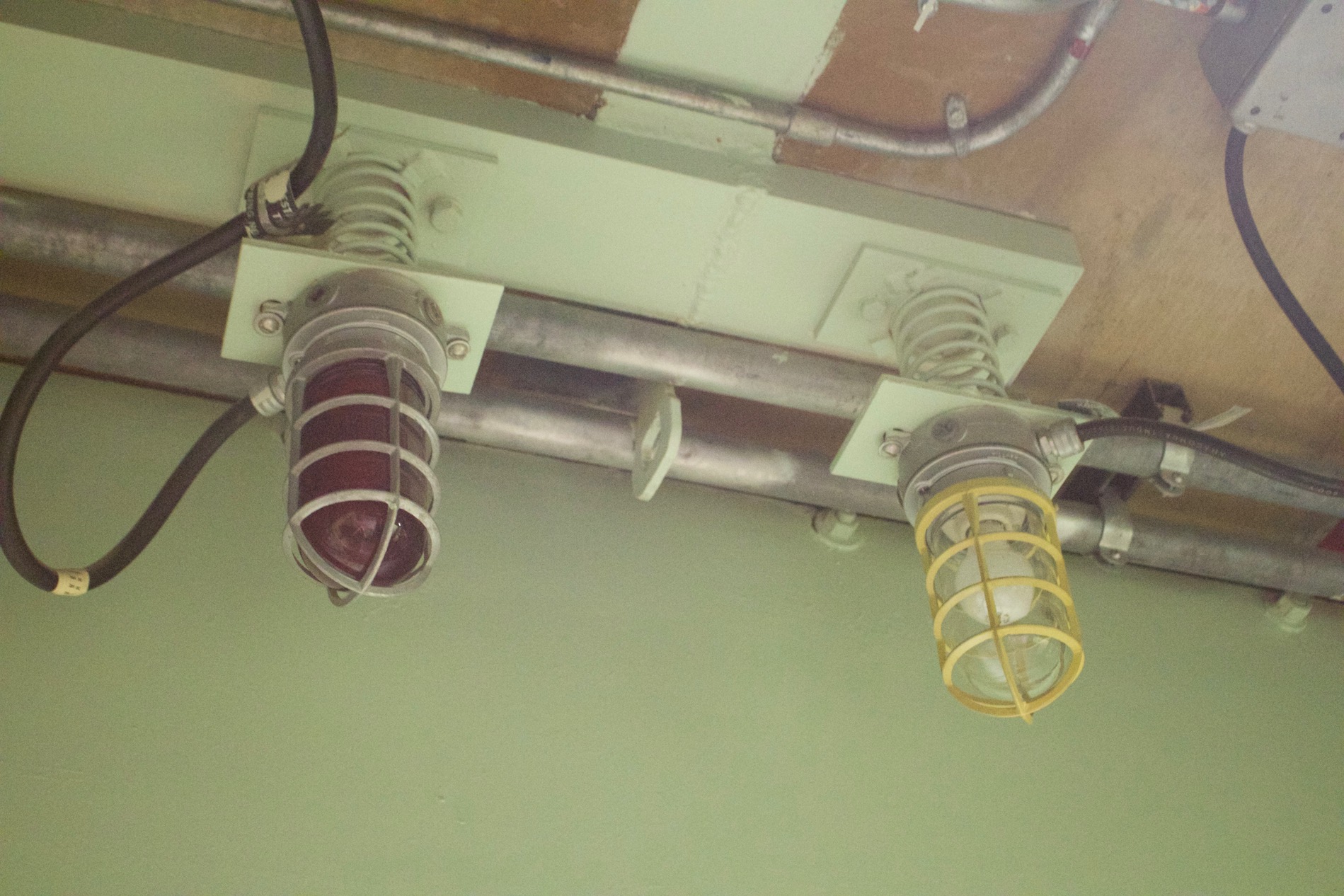
Internally it was all very efficient with a long corridor – more blast doors – between the silo itself and the control room and living quarters. Everything was on great springs – including light bulbs – to protect again blast/earthquake.

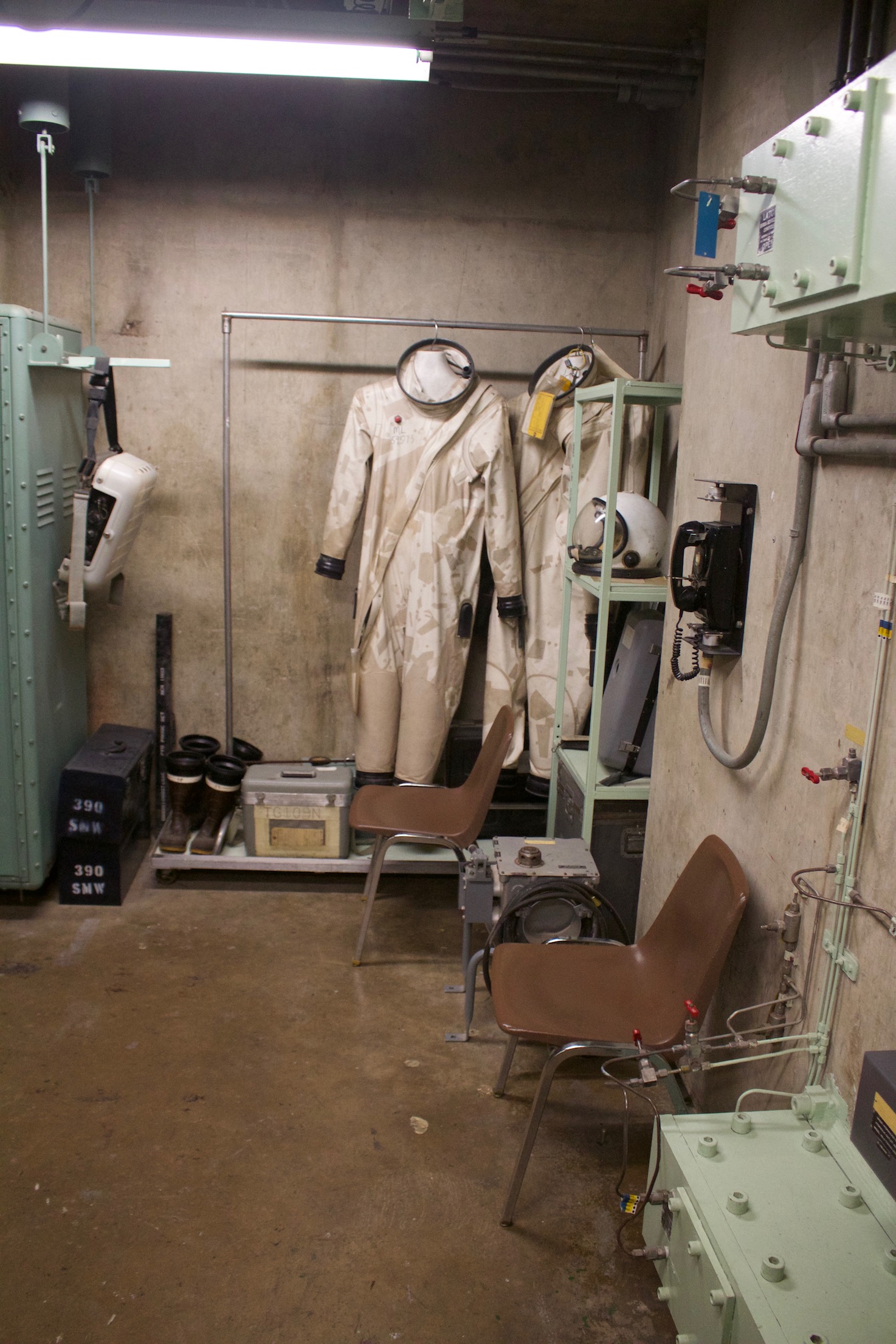
And there was only a crew of four, two officers who’d fire the missile and two non coms who’d were maintenance specialists, including the highly dangerous fueling, hence the protective space suits. The fuel once in had to be kept at a constant temperature as it would otherwise combust. Nice.
While I have no difficulty with the logic of Mutually Assured Destruction – it worked after all – I did find the prospect open to a crew who had fired their missile particularly grim. They would know that the US had been attacked before they fired but in all likelihood would have had no further contact. The air would last for fifteen days but what then? Suffocate or climb into a post nuclear world?
To finish happily, the missiles were also used in the space programme and, most importantly of all, this very site featured in Star Trek: First Contact, with the missile itself playing Zephram Cochrane’s first warp flight vehicle!

Oh, and for balance, you can also visit a similar Soviet SS19 launch site in Eastern Poland, though I suspect the gift shop won’t have as many T-shirts or baseball caps.
